
Fighting for a share: How rural women push back on land inheritance in northern India
By Ece Kocabıçak (The Open University)
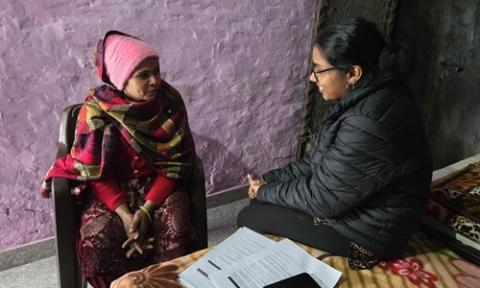
In rural areas of Northern India, land continues to follow a familiar path of inheritance: from grandfathers to fathers, and then to sons. Research based on interviews with rural women conducted in 2025 shows that this strong male lineage remains the dominant pattern of land ownership. Although India introduced gender-equal inheritance laws in 2005[i], legal reform has not fully transformed everyday practice. Most women interviewed were aware that they have the legal right to inherit land from their natal families, yet many said that in practice the land would eventually pass to their brothers.
At first glance, this might suggest acceptance of patriarchal norms. But a closer look reveals a more complex picture. Women are not simply passive recipients of these rules. Many actively negotiate, reinterpret and sometimes challenge inheritance practices in subtle ways. Ece Kocabıçak’s research explores how women navigate these tensions between legal rights and entrenched social norms.
For some women, transferring natal land to brothers was framed as a pragmatic compromise rather than compliance. Several explained that they viewed land in their marital households as joint family property shared with their husbands. In this context, giving up natal land was seen as balancing benefits between the two families. One woman explained that although the law now grants daughters equal inheritance rights, her brothers cannot access the land she benefits from through marriage. Passing natal land to them therefore seemed, in her words, “fair”.
Yet when the discussion shifted to marital land, women’s responses were markedly different. Here, resistance was much more visible. One woman expressed deep frustration that no one in her marital household considered giving her daughter a share of the land. Another adopted a more strategic approach. Determined to prevent the land from passing solely to a male nephew, she began working within the family to secure shares for her daughters. Her strategy relied on solidarity: she formed an alliance with her sister, who had also married into the same family. By acting together, the two women strengthened their ability to negotiate within a system that often marginalises individual women’s claims.
Some women also attempted to bend inheritance norms by presenting their circumstances as exceptions. Two unmarried women openly questioned the expectation that they would eventually relinquish their natal land. One explained that if she chose not to marry, the property should be divided equally between herself and her brother. By invoking their single status, these women carved out space to assert rights that are often denied to married daughters.
Women’s strategies also extended to supporting other women in the family. In one case, a woman insisted that her share of natal land be transferred not to her brother but to her brother’s wife. Her reasoning reflected the broader constraints women face: since women are often prevented from holding land in both their natal and marital families, she wanted to ensure that at least one woman in the extended household would gain ownership.
Conclusion
- In summary, the research highlights how gender discrimination in land inheritance persists in rural Northern India, particularly in contexts of small landholdings where families seek to consolidate land among male heirs.
- Yet the findings also reveal that women are not simply accepting these arrangements. They negotiate, reinterpret rules, build alliances and sometimes redirect land to other women.
- Through these strategies, some manage to secure land rights for themselves, their daughters, or other women in their families.
- These everyday acts of negotiation may appear small, but they quietly challenge the patriarchal foundations of land ownership. In doing so, rural women are gradually reshaping who gets to claim a place on the land.
- For researchers and practitioners concerned with gender equality and land rights, these findings highlight the importance of recognising everyday forms of negotiation that shape how legal reforms are experienced in practice.
[i] This research was conducted in collaboration with LEAD at Krea University and is forthcoming in a 2026 publication by Ece Kocabıçak, Yasemin Dildar, and Sabina Yasmin.
Request your prospectus

Explore our qualifications and courses by requesting one of our prospectuses today.
Are you already an OU student?


Explore

Undergraduate
Postgraduate
Policy
-
Follow us on Social media
-


