
Interdisciplinary study throws new light on premodern experiences of bodies
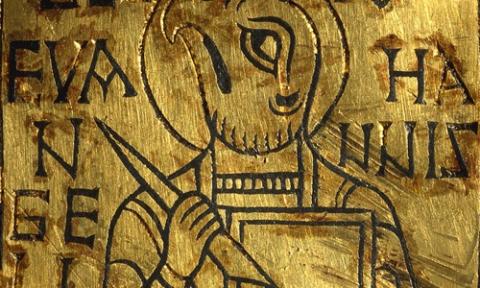
New research published in the University–based Open Arts Journal shows the multiple ways in which images shaped, constituted and challenged perceptions of bodies and corporeal practices in premodern Europe.
Today images of bodies are splashed across the news and the web, carrying messages, shaping experience and provoking debates. Past pictures of bodies, althogh fewer, also played critical roles. But what constituted a body was framed in ways that we may no longer recognise.
Stemming from the activities of the University’s Medieval and Early Modern Research Group, scholars working across disciplines came together to research representations of bodies produced between the early middle ages and the late seventeenth century. The results (including contributions from scholars at other institutions) are now accessible in Picturing bodies in medieval and early modern Europe , edited by Andrew Murray and Margit Thøfner, issue 12 of the Open Arts Journal.
The essays range widely by place, time and approach, but all start from the premise that artworks and other forms of visual culture actively informed, perpetuated and challenged ideas of embodiment, the process by which people experienced and understood ‘being a body’.
Several essays explore what happened before the drawing of boundaries that we take for granted—among humans, animals and inanimate objects, and between individuals. These were blurred in early-Anglo-Saxon England, where human and raptor bodies comingled in funerary assemblages and artefacts, and in Viking society, where human bodies ‘entangle[d] past, present, and future’. Boundaries were still drawn in surprising ways in the early modern period, when a musical instrument—a remarkably decorated organ—was part and parcel of the corporeal practices of Protestant nuns, including the creation of the collective body of their community.
Essays in the issue share close interrogation of artefacts and cultural practices, for example the acts of veiling in Christian liturgy that exemplify complex and influential assumptions about bodies and images, not least ‘their possible elision’. Religion—theology as well as everyday devotional practices—framed processes of embodiment, but so did other cultural resources such as the influential tradition of Galenic medicine.
Several contributions reveal the multiple meanings that pictures of bodies could acquire and the need to interpret them across what we now classify as art, science or knowledge. From this perspective, Renaissance representations of conjoined twins, a famous painter’s portrait of a plump French queen and the graphic pictures of orifices used to instruct male surgeon trainees in seventeenth-century Rome, all show that producing and using images contributed to the often contradictory cultural and social processes by which bodies were experienced, categorised and constituted. As specific contexts are reconstructed, questions of gender and sexuality become central to interpretations, and the changing contours of what constitutes a human body are fully revealed.
Based on new and extensive research, the essays provide multifaceted but coherent analysis and the issue showcases the benefit of intense interdisplinary conversation in exploring the agency of pictures.
Request your prospectus

Explore our qualifications and courses by requesting one of our prospectuses today.
Are you already an OU student?


Explore

Undergraduate
Postgraduate
Policy
-
Follow us on Social media
-


