
Research in Art History
Our research engages with fundamental questions about why visual, material and spatial cultures – both past and present – matter in the world today. Our research champions inclusivity, addresses inequality, and reflects on diversity within the fields of art, architecture, and design histories. It aims to counter elitist ideas of Art History, by aligning our research with the Open University’s social justice mission in asking how art and design play a vital role in the ways that people live in the world. Across these diverse interests we examine the power of art in people’s lives by studying how art interacts with what we see and do in the world and how we interact with one another.
Our research spans from the art of prehistory to the contemporary world. We research across time and place ranging from investigating the making of cave paintings, to the relationship between art and music, and how artists work towards social change.
Our research encourages new questions and ideas. It questions and expands the boundaries in Art History and encourages participation in art’s wider relevance. We believe that knowledge is the gateway to positive societal change, and our research projects, collaborations, and groups reflect this outlook. We are also concerned with open access to our research, as seen in the Open Arts Journal, freely accessible to readers globally and now in its 11th edition.
In tandem with our commitment to widening participation, we provide critical reflection and theoretical contributions on global and transcultural issues. We are interested in questions such as the ways in which art can be used to address issues of climate change, how studying artists’ work can help to deal with difficult social questions around identity, and how we can bring art to communities who have traditionally had little opportunity to engage with Art History.
How we work with others
We encourage collective and collaborative projects with academic colleagues, both inside and outside the OU. We collaborate on research with the GLAM sector (Galleries, Libraries, Archives and Museums) including with the National Museum of Wales, Glasgow Museums, and the Museum of the Home, and with heritage bodies such as the National Trust. Research groups based in the Department which span our collective research interests. Currently these include:
- The Objects, Collections and Museums Research Group is an interdisciplinary network co-convened by Dr Amy Barnes and Dr Amanda Sciampacone that brings together researchers from across the Open University whose work engages with material things, the curatorial practices that define them, and the museums and collections that house them. Members’ interests encompass a wide range of topics, including, but not limited to, the legacies of colonialism on museums, the interpretation and reception of objects, the history of collections and collecting, and the social role of museums.
- Open Ecologies, co-founded by Dr Carla Benzan and Dr Samuel Shaw in 2021, brings together Open University academics, staff and students from across the natural sciences, social sciences, and humanities. This interdisciplinary network develops OU research that engages with issues of climate through regular brown bag talks, an annual conference on teaching environmental issues in higher education, and an away day for members. Members of the group work across ecocriticism, environmental history, arts-based methods, and scientific methods to transform understandings and responses to the Earth Crisis.
We also receive funding for our research from a number of institutions including the Arts and Humanities Research Council (AHRC), the Leverhulme Trust and the Paul Mellon Centre, as well as learned societies. Their financial support and encouragement has enabled both individual and collaborative projects. Examples of these include:
- Renate Dohmen: Colonial Art in British India: Power, Gender and Race under the Raj (Leverhulme Trust Fellowship)
- Angeliki Lymberopoulou: Research Fellowship at Dumbarton Oaks to work on associative Byzantine iconography and grant from A.G. Leventis Foundation for the project ‘Preservation of Cretan Churches’
- Clare Taylor: Gilt Leather Rooms (Paul Mellon Centre for the Studies of British Art, Mid-Career Fellowship)
- Margit Thøfner: Analysing Art and Music in the Southern Low Countries (AHRC Networking grant)
- Amy Barnes: Collections of Revolutionary Chinese Porcelain Ceramics in UK Museums (Design History Society Research Access Grant)
Our interdisciplinary research
Collaborations across the Arts and Humanities School include interdisciplinary research on the body (as part of the Medieval and Early Modern Research Group, the subject of a forthcoming Open Arts Journal special issue), gender (as part of the Gender and Otherness in the Humanities group GOTH again as part of a forthcoming volume), and in the Digital Humanities.
Our close collaboration with the Design Group, part of the STEM Faculty, is also reflected in activities throughout the academic year such as joint events, including through the Open Ecologies Research Group, Writing Retreats and regular Work in Progress seminars. The seminars involve both PhD students and members of the Art History Department and Design group sharing recent research questions and methods.
Knowledge exchange
Our research is shared with broader audiences through a wide range of media. Some recent examples are listed below.
BBC collaborations
Drawing on our research expertise in visual, material and spatial cultures, Art History members also act as academic consultants on television programmes co-produced by the OU, some recent examples of which are listed below. This role involves advising filmmakers on editorial content, reviewing scripts, and devising learning resources to accompany the programmes. You can find links to these below. They are all free to view and open access.
Windrush: Portraits of a Generation (2023)
Professor Leon Wainwright was one of two academic consultants for this landmark OU/BBC programme. Commissioned by King Charles III, it tells the story of ten men and women who came from the Caribbean to the UK as part of the so-called Windrush Generation. Leading contemporary artists of colour are filmed creating individual portraits of members of this group. The resulting works of art suggest the power of artists’ responses to histories of migration and racism, witnessing and honouring their sitters. The paintings, collages and photographs that emerged now form part of The Royal Collection and have toured the UK. The films offer a tribute to a set of interviewees but also to the wider national community of people of Caribbean backgrounds and subsequent generations, suggesting what may be learnt from the many ways of remembering Windrush stories. The programme reached 550, 000 viewers.
Explore some of the free resources created for the series.
Treasures of India (2023)
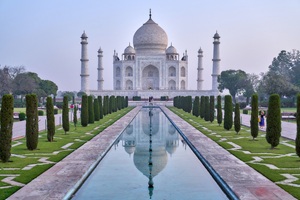
Dr Renate Dohmen was one of the academic consultants on these two programmes, filmed in India for Channel 4, which explored new perspectives on India north and south and were presented by Dr Bettany Hughes. Apart from showing India’s famous sites like the Taj Mahal and Hampi, the films also explore living artistic traditions, such as the eye opening ceremony of Chola bronze sculptures made by craftsmen using centuries-old techniques. The programmes reached 1.3 million viewers.
Explore some of the free resources created for the series including Dr Hughes explaining why she makes films.
Art That Made Us (2022)
Dr Amy Jane Barnes was one of the academic consultants for this landmark 8-part BBC series. This was an interdisciplinary Arts & Humanities project. The series explored 1500 years of creativity in the arts across the British Isles from Spong Man and the Staffordshire Hoard, to pop artist Pauline Boty and the work of Tracey Emin. The series averaged 680,000 viewers per episode.
Explore some of the free resources created for the series, including the stories of the artist Mary Beale and the architect Ethel Mary Charles.
Secrets of the Museum (2019-22)
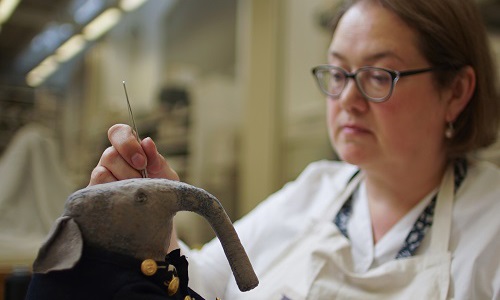
Professor Clare Taylor and Professor Leon Wainwright were the academic consultants for all three of the 6-part BBC series. The programmes explored the stories behind the conservation and exhibition of artworks in the collections of the Victoria & Albert Museum, V&A Dundee, and the V&A Wedgwood Collection, revealing for many viewers for the first time the painstaking work carried out behind the scenes at the museums. Stars included Pumpie the elephant, telling stories of colonialism and belonging, seen above undergoing conservation treatment. The series reached 10.2 million viewers.
Explore some of the free resources created for the series, including the chance to select artworks yourself for display.
Art UK
Colleagues contribute to efforts to digitise public art on this national database and to Art UK Stories, including:
- Following the tracks of Scottish polar bears
- Our precious birds: a proposition for art lovers and birdwatchers
- Tiger, tiger burning bright: the big cats in art
The Conversation
We also contribute to current debates in our discipline, both through professional bodies and the online platform The Conversation. Recent contributions include:
- The response to Banksy’s tree highlights an ambiguity at the root of his ‘activism’
- Nature award for polar bear photo shows that images of these magnificent creatures still have the power to move people
Find out more
News relating to research in Arts & Humanities, including Art History, can be found on the Open Arts Research Centre (OpenARC) news page.
Discover our individual researchers and team of academics on the people page.
Our ‘open access’ pages provide our student community and global audience with free learning resources. For more information, please visit the Open Arts Archive and the Open Arts Journal.
Request your prospectus

Explore our qualifications and courses by requesting one of our prospectuses today.
Are you already an OU student?


Explore

Undergraduate
Postgraduate
Policy
-
Follow us on Social media
-


