







This year, on International Women’s Day, it feels more important than ever to acknowledge and celebrate the power of collaboration among women to effect change.
For researchers and practitioners concerned with gender equality and land rights, the findings in this research highlight the importance of recognising everyday forms of negotiation that shape how legal reforms are experienced in practice.
In this piece, I reflect on how key motifs—journeys, everyday objects, and acts of movement—have echoed through my personal exploration of diasporic memory and heritage. I dwell especially on the metaphor of “the cracked cup of memory,” coined in 1996 at the outset of my academic journey in Indian diasporic studies, and trace how three decades of scholarly reflection, communal connection, and transnational academic collegiality have nearly soldered it whole.
Enbah reflects on her first ever international conference and the impetus to engage in creative experimentation more often.
Nithiya reflects on translation as an act of resistance and connection. Through her work with marginalised Malaysian Indian women, she shows how language carries emotion, memory, and identity. Translation becomes a way to honour their voices, challenge her own privilege, and build bridges between lived experiences and public understanding.
According to our data some ways to be an effective and inclusive chair include:
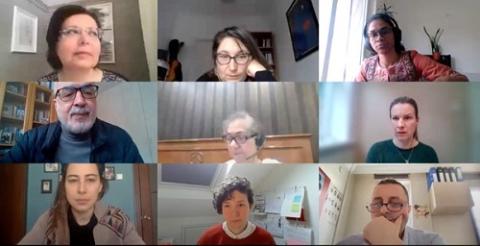
The GEiO project shines a light on how digital environments, including online meetings, can be used to support equitable relations at work. Our data reveals that meeting chairs play a pivotal role in encouraging fair interactions in online meetings.
Depending on the context of the meeting, there is a great degree of flexibility in the way chairs carry out their role. Factors such as meeting purpose, topic, formality and participant relations all influence the approach of the chair.
Keshia reflects on her journey of reconnecting with her roots through the URMI project. Though born in India, she grapples with feelings of dislocation and privilege as she works alongside Malaysian Indian women affected by colonial legacies. Through poetry, personal memory, and participatory research, she explores how shared heritage and solidarity can offer healing and understanding, even from the position of an “outsider within.”
Nithiya shares her reflections on celebrating cultural and religious events by exploring how the events connect her to the resilience of her ancestors. She draws parallels to the enduring strength of the women involved in the URMI project and how the cultural events symbolise their struggles.
Enbah reflects on her fieldwork experience in Penang and Kuala Lumpur, emphasizing the emotional connections and unique challenges faced by participants. She weaves in her own experience of making sense of trauma via communal storytelling.
Geetha reflects on their journey as a person with Indian ancestry and diasporic identity. They discuss how this personal connection shapes their understanding of colonial legacies in Malaysia, especially the marginalization of Malaysian Indian women, drawing parallels to their academic work
A collaboration between academics, artists and NGOs, Art for a Better World uses visual arts to make research about global social challenges accessible to general audiences.
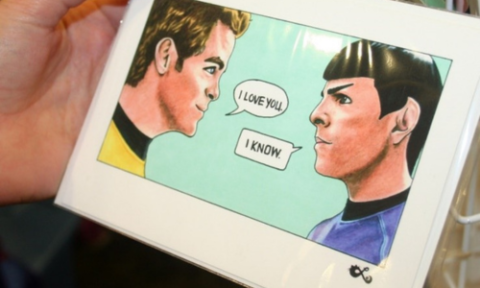
Lauren O’Hagan discusses her engagement with online fandom sites, and ways in which they can contribute to improved mental wellbeing.
The present in the temporal sense no longer refers exclusively to the presence of a person, but to all relationships that exist in the present—those that are current yet also subject to change. With the emergence of the term ‘present’, the multiplicity of contemporary relationships is metonymically or elliptically summarized as ‘the present,’ abstracting the concept into a temporal framework.
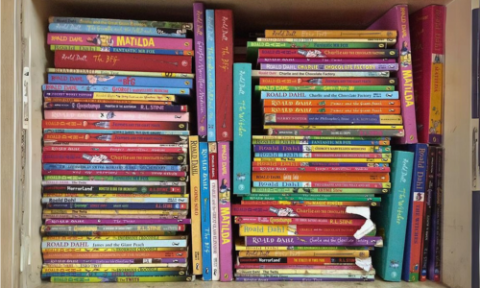
Generalising from last year’s media controversies over the supposed “bowdlerisation” of Roald Dahl by his current publisher, Puffin UK, this essay proposes a new sub-category of catchphrase—the historical catchphrase. Snippet-style or catchphrase-length historical analogies like “bowdlerisation” connect present-day controversies with episodes from popular historical memory, telling us what to think of the present using the lenses of the past.
Kerry Jones explores the use of the arts in research about and for young people during the Covid-19 pandemic, as well as new projects working with bereaved fathers and carers.
The essay begins by noting that the usual translation of ‘catchwords’ into Russian is ‘krylatye slova’ or ‘winged words’. The Homeric origins of the phrase, its Russian adaptation via Georg Büchmann’s Geflügelte Worte, and the study of such words by linguists are discussed. The assumption that such words have an authorial/textual origin is considered from an Anglophone perspective.
With a view to initiating a blog on Chinese catchwords, this essay outlines a few contextual and methodological issues in relation to studying those from a media studies perspective.
This essay presents reflections on the construal behind and possible overlap between the terms ‘winged words’ (including ‘winged phrases’), ‘catchwords’ (including ‘catchphrases’), and ‘precedent lexemes’ (under which both words and phraseological units are subsumed). The first and last are familiar in Bulgarian and Russian.
Can reading fiction help improve our skills of empathy, and how might that be achieved? Psychologist Rose Turner surveys the evidence and asks where research might focus next.
Wang Yusu explains what 'catchwords' and 'keywords' mean in relation to Chinese Internet subcultures, and gives an overview of sources and disciplinary approaches.
The Loss Project uses creative activities to support people and communities experiencing grief and loss. Carly Attridge and Claire Henry discuss some of the different approaches they have used.
This essay uses Theodor Adorno's concept of Stichworte to clarify how catchwords/phrases work, with illustrations of catchwords/phrases generated by former Brazilian President Bolsonaro's organisation and supporters.
Naomi Holford and Sara Clayson’s project explores the ways in which fanfiction can help young people’s wellbeing. Narratives of sexuality, gender and disability create an important space for engaging with aspects of identity and representation.
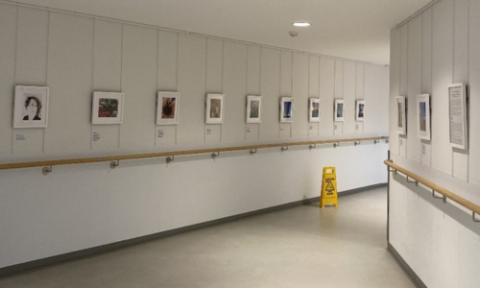
We’re writing today about a project in development; an evaluation project with charity Arts for Health Milton Keynes. Their work fits well with this research group. Not only are they based in Milton Keynes University Hospital and are local to The Open University campus, but their work focuses on fostering the health and mental health benefits associated with participation in the arts.
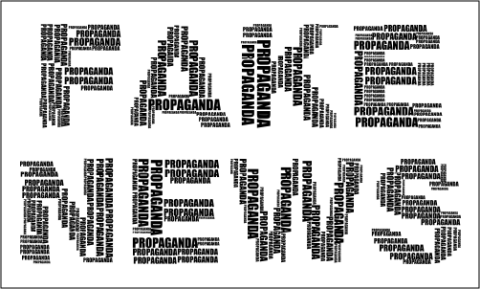
This article discusses how political catchphrases – and political slogans in particular – relate to the generation of mis- and disinformation, and at how the elements that constitute both political slogans and ‘fake news’ are closely related to a set of core properties found in propaganda.
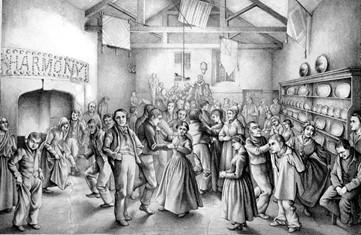
Nicholas Canny and Simon Holland discuss the development of their interactive tool, Harmony Space. The tool is intended to give access to musical experiences for those with no training, including people with disabilities.
Rosemary Golding introduces the Psychiatry and the Arts in Nineteenth-Century Britain Network, which seeks to bring together historians and practitioners in order to find new connections and research directions.
The study of political catchwords involve some delicate negotiations with definitions. This essay considers what definitions are and what they do.
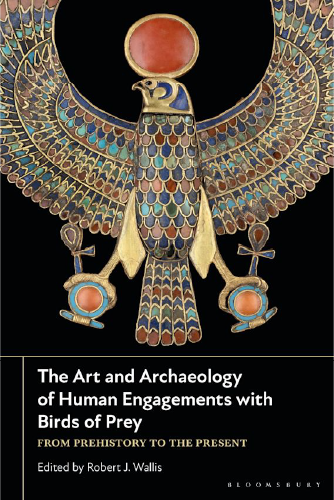
The Art and Archaeology of Human Engagements with Birds of Prey: from Prehistory to the Present, comprises 13 chapters examining a variety of visual and material culture in light of posthumanist thinking on human-raptor relations.
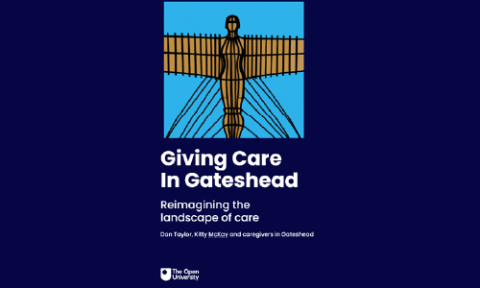
Unpaid care is a social and political issue, and to some extent even a question of social justice. Since late 2022, Dan Taylor has been working on a UKRI-backed knowledge exchange project in Gateshead, a town in North-East England, to understand how unpaid caregivers can be better supported and enabled to thrive.
Poetry and creative writing offer new forms of expression in the most difficult of human experiences. Patrick Wright introduces his collection of poems inspired by experiences of disability, illness and the loss of his partner.
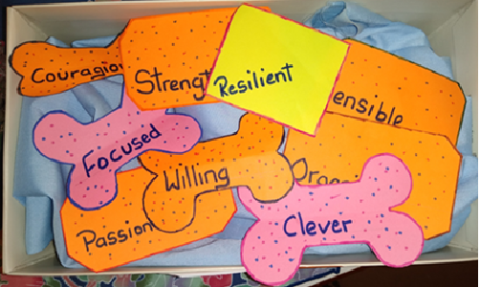
This blog post describes a project using art to help women living in sheltered domestic violence refuges in Guyana. The women created boxes exploring their skills and aspirations, shared experiences, built communities and founded businesses.
This essay draws upon Sylvain Lazarus's Anthropology of the Name (1996 [in English 2015]) to propose an explanation as to why certain political catchwords/phrases become such.
In this article I address the question of what constitutes a political catchphrase, and in formulating an answer, look at the range of partially synonymous and related terms which fall broadly within the semantic field of the ‘catchphrase’.
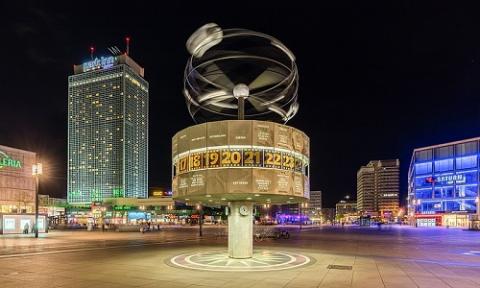
The REDEFINE team have enjoyed hosting and engaging with a number of academics and practitioners during a packed discussion driven, one day event held in Berlin, around the interesting theme: 'Sino-European Relations: Developments and Trajectories'
A discussion of how archives of perceptual estimations may be used to explain why catchwords catch.
Music was widely used by the Victorians to improve mental health in newly-founded lunatic asylums, via concerts, dances and ad-hoc music making. This post explores some evidence from contemporary published articles.
The ‘Take Five to Age Well’ programme demonstrates ways in which we can adopt new lifestyle factors to affect ageing. These include aspects where the arts can affect both mental cognition and social engagement.
This essay considers ways of determining why terms become catchwords by using NLP methods.
Catchwords/phrases catch on, so their uptake is the starting point for thinking about them. This blog outlines some of the definitive features of catchwords/phrases, and discusses the frequencies of usage that characterise their catchiness
On Thursday, 6th July, a small group of OCM members met in the fine city of Norwich, for a day of museum and heritage exploration.
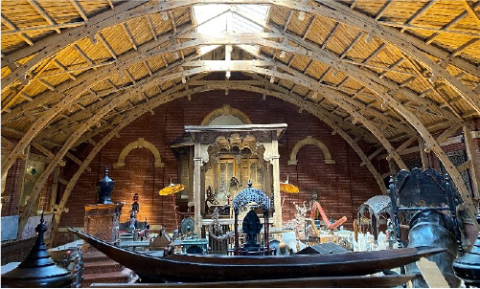
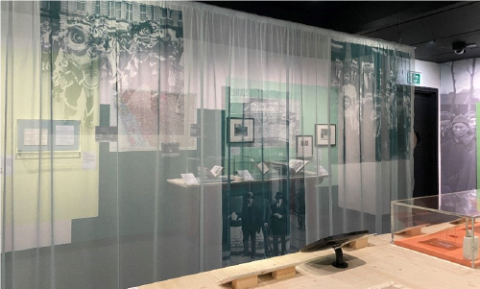
On Thursday, 9th March 2023, an intrepid band of OCM group members gathered in London to visit a couple of exhibitions that offered interesting and thought-provoking perspectives on using objects and collections to tell particular narratives.
This blog considers an open set of words and phrases which are descriptively qualified by a metaphoric prefix: ‘catch-’. Like ‘catchwords’, other sets of words and phrases are also named with metaphoric prefixes: ‘keywords’, ‘buzzwords’, ‘winged words’.
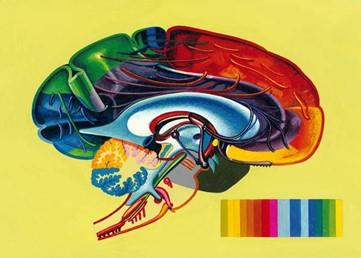
Introducing the Health and the Arts Research Group, our activities to date, and the scope of our work. We draw academics from across the University with research interests in the intersections between health and arts.
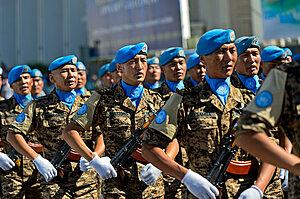
What is the future of UN peace operations and what new research approaches should scholars take to both understand and influence their evolution? These were the central questions academics explored during a two-day international conference entitled Multidisciplinary futures of United Nations peace operations on 20 and 21 February 2023.
The war in Ukraine has devasted infrastructure. How (re)construction will be undertaken – and who will pay for it – is becoming a key question. This entry considers the prospect of Chinese capital financing Ukraine’s recovery.
In trying to research the assembling of a major infrastructure project we must do many things which require inter-disciplinarity and multiple methods.
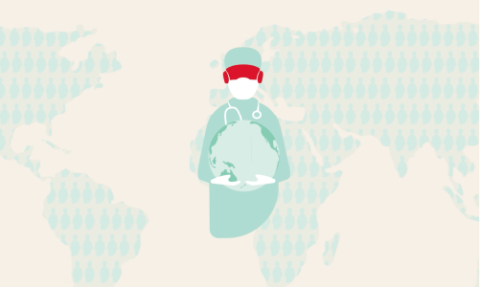
The majority of migrant health care workers across the world are women. Many migrant workers leave their own families behind in order to deliver vital care to others abroad. They provide invaluable services to our health systems, yet they are invisible in terms of rights.
In July 2022, the Welsh Government launched the basic income pilot for people leaving care in Wales. This pilot will add to debates about a universal basic income. A universal basic income is an old idea and can be traced back at least to works such as Thomas More’s Utopia published around 500 years ago.
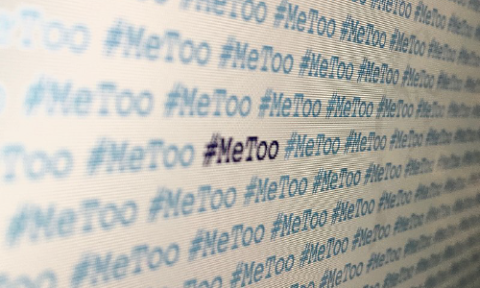
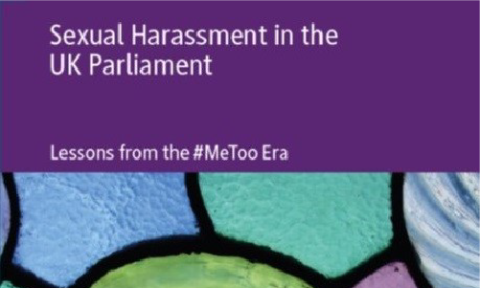
Sexual misconduct at the core of Britain’s political establishment is the focus of a new book on Sexual Harassment in the UK Parliament, which draws on an intersectional feminist perspective and academic literature on Violence Against Women in Politics (VAWP) to examine the plight of female victims of sexual transgressions in Westminster.
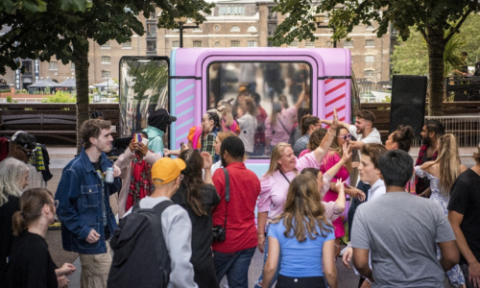
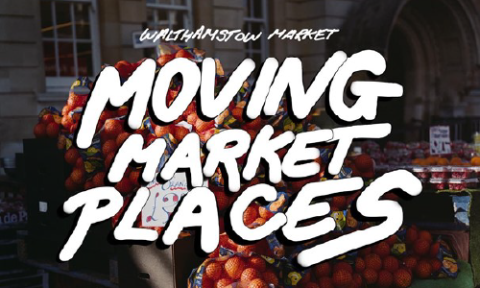
Over the last three years the Moving MarketPlaces (MMP) project has been investigating how market traders in England produce inclusive public spaces. The team at The Open University organised a public exhibition at Walthamstow Market with two street photographers, Lourice Ramos and Lloyd Ramos.
Processes of citizenship are linked to the norms and patterns of social order, as discussed by Catherine Neveu. It may be productive to reframe issues in terms of processes and practices of ordering.
Looking at citizenship as a ‘living’ practice can show us how citizens themselves construct the concept of citizenship and how they negotiate, contest, claim and enact their positions as rights bearers vis-à-vis others.
Why do some developing economies have gender gaps in the movement of labour from agriculture to non-agricultural sectors? Looking at India, Pakistan, Bangladesh, Turkey, Egypt and Morocco, a research network aims to find answers.
Understanding of Europe as a territorial space is ambiguous and ambivalent. Overcoming longstanding contradictions will help alleviate infrastructure inequalities and assuage divided attitudes towards China.
We all use infrastructure every day. As a result, we all have of an intuitive understanding of what infrastructure is. But how do we, REDEFINE, understand Infrastructure?
As China’s political and economic influence across the globe increases what does this mean for how we think about the idea of development?
This paper was presented as part of the panel entitled Changing Cultures: Arts and culture as agends and means of change in migration socities (panel #166). Chaired by Jens Schneider, this third session of the panel aimed to analyse collaborative projects between research, arts and culture and their impact.
Several of our members took part in the 18th IMISCOE Annual conference in July 2021. This year the conference theme was Crossing borders, connecting cultures. This was the second year the conference was hosted online by the University of Luxembourg. In 2020, IMISCOE’s annual conference was hosted with the support of IMISCOE, The University of Luxembourg and The Open University.
Discover the herstories of migrant businesswomen in 1911 London. This walk traces the presence of migrant women who ran their own business in 1911. The walk is about 5.5 km/1.5 hr
Women who ran groceries and other food sales shops were much more likely to be married. Often, the occupation of their husbands was a grocer as well, suggesting a de facto partnership. However, there were substantial numbers of female grocers married to butchers, coal merchants and other food sales occupations.
Lodging house keeper tended to be older than dressmakers. The key requirement was some business capital in the form of a house, which was often only achieved at middle age groups. Renting out rooms provided a vital form of entrepreneurial income for women who otherwise might have struggled to support themselves and their families through waged labour.
Dressmaking stood out as a trade that allowed women to set up their own business from a young age, even compared to other parts of the clothes-making sector.
Of the migrant business women identified in our study, a third were single and never married and another third were married and lived with their husbands. Amongst the remaining one third, majority of the women were widowed, and a smaller group were women who were married but with absent spouses.
The census is a snapshot of a moment in time. Our data counts migrant women who self-reported as operating a business on 2 April 1911, regardless of how small this business was, its longevity, or success. Our data includes many women who people may not immediately think of as running their own business, such as foreign language teachers, artists, and masseuses. This post follows from our earlier disucssion examining the definitions which aided our search for migrant business women in the 1911 census.
Women business owners have largely remained invisible in discussion of entrepreneurship during Edwardian England. This is because of two reasons: the location of the businesses, and feminisation of skills Over 75% of the women entrepreneurs ran their business from home.
Non-British empire migrants lived almost exclusively in large towns, especially in London. In each census year, 44 per cent to 48 per cent of the non-British Empire migrants lived in London. In London itself, migrant communities were concentrated in the East End, with smaller communities in Westminster, Marylebone, Hampstead and St Pancras.
In 1911, the migrant population had a higher rate of business proprietorship than the English- and Welsh-born population. Migrant women made an important contribution to the economy by providing both goods and services, and employment. Many of their businesses were small and in areas of the economy, such as dressmaking or food preparation and retail, often considered by historians to be less important than industrial production.
We found over 3,000 women in London born outside the UK in the 1911 census who ran their own business. Around a third of them employed others in their business, the other women ran their business on their own.
This first post serves to introduce the project, it’s aims, and its forthcoming outputs. This project brings together the work of Dr Carry van Lieshout on women entrepreneurs in census, and work of Dr Gunjan Sondhi on gender and migration. The aim of the project is to make visible the stories of migrant women entrepreneurs drawing from 1911 UK Census. It also offers a view into the contemporary landscape of migrantwomen entrepreneurs.
Kent Taylor’s vlog is based on his undergraduate research on American bass music communities, looking into the shift to online research methodology amidst social distancing, in the summer of 2020. Kent discusses the interface between our scholarly goals—that is, as researchers and representatives of the University—and the collective goals of the American bass music and EDM festival scene. His analysis of social media sources explores the real dimensions of this interface, as a forum where music scenes and university communities, alike, develop their ethics on pandemic, racial justice, and sexual misconduct.
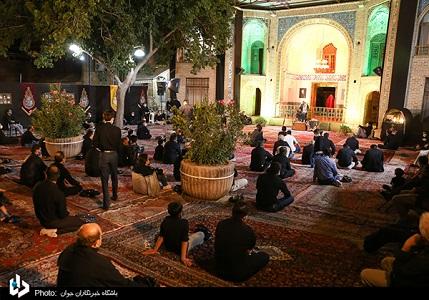
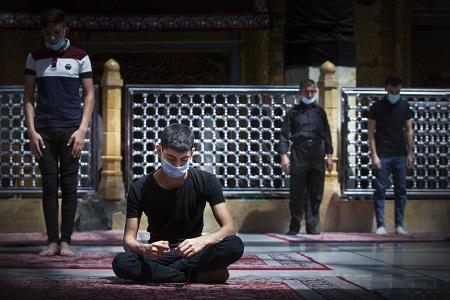
With the global spread of the Covid-19 pandemic in 2020, all countries of the world, and consequently most of the world’s religions, faced new conditions and unforeseen problems. One of these issues has been the religious interpretation of the epidemic, the duties of the believers in these circumstances, and the holding of religious ceremonies during the pandemic. Shiite Muslims also faced a large number of these challenges.
With the advent of COVID-19 around the world, areas with significant Shiite populations soon became involved in debating how festivals could be held. Shiite scholars generally refused to hold Ashura festivals in 2020 as these happened in previous years, whilst curtailing visits to shrines. On the other hand, Shiite theological arguments made it possible for some Shiites to perform pilgrimage remotely, by using modern technologies. However, these changes strongly challenged the issue of closeness in Shiite festivals.
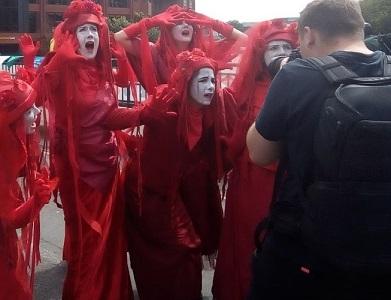
Prof Tony Walter’s blog discusses the tensions implicit in Extinction Rebellion (XR) protestivals, as they warn of dire eco-catastrophe yet are often playful, carnivalesque. Intended to diffuse anger from police and bystanders, having fun while inconveniencing others can also produce negative reactions both in bystanders and potentially in XR rebels themselves.
The changing landscape of music festivals, and the necessary movement online, is changing the way that individuals not only consume the festival experience but also the way in which these individuals interact within the music festival experience.
![]()
Explore our qualifications and courses by requesting one of our prospectuses today.